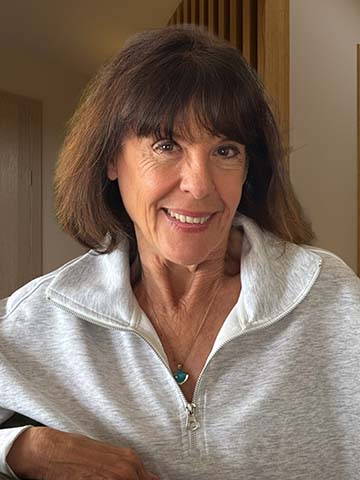



“A chance phone call just hours before that midnight deadline stopped me in my tracks.”
Life isn’t just a series of random choices; it’s a mission. For those of us who have served — whether in the military or law enforcement — we are trained to complete that mission at all costs. But what happens when the mission gets too heavy? What happens when the weight of the world you’ve seen finally begins to crush the person behind the badge?
I’ve spent the better part of my life in the shadows. My career began as a Navy Search and Rescue Swimmer, where I learned to dive into the chaos of the ocean to save lives. Later, I transitioned into law enforcement, eventually becoming an undercover narcotics detective. I have seen the darkness of this world up close — the devastation of the opioid crisis, the violence of the streets, and the human wreckage that remains in their wake. For years, I believed I was fine. I thought the “mask” I wore to survive undercover was just part of the job.
But the toughest fight I ever faced wasn’t in the streets or the open sea. It was the battle inside my own head.
In March of 2017, I was done with this world. The “cost of the mask” — the fractured identity, the hypervigilance, and the imposter syndrome that comes with living a double life — had finally broken me. I felt like a “gray” version of the man I used to be. I wrote my suicide note and scheduled my “earthly exit” for midnight on March 17th. I truly believed I had nothing left to offer my family, my sons, or my community.
A chance phone call just hours before that midnight deadline stopped me in my tracks. It was a moment of grace that forced me to realize that even when the “undercover” role follows you home, you have to fight to find the man behind the uniform again. You have to choose to stay when quitting feels like the only logical exit.
My journey back from that edge, which I share in my memoir, The Journey to Midnight, taught me that my trauma wasn’t a dead end. Instead, it was a roadmap. I realized that my lessons could be blessings and could help others who were lost in their own darkness. Today, I believe that by sharing our stories, we take the power back.
If you are currently in that dark place where the world has gone gray, I want to share the three pillars that saved my life.
The Power of Perspective
One of the keys to making good decisions is to shift your perspective. When you are in the middle of a mental health crisis, your brain tells you that this pain is permanent. It tells you that this is who you are now. I’ve had to learn to remind myself that the cloud hanging over me is just that—a cloud. This too shall pass. It is a temporary state of weather, not my entire life. By making choices that align with your long-term goals and values—rather than your immediate feelings—you can begin to steer yourself out of the storm. Slowly you’ll begin to find the storm was sent to break you, it was sent to build you.
“Depression makes the simplest tasks seem impossible. When I was at my lowest, the idea of “recovery” felt too big to touch. Each day make one small, consistent change.”
Small Steps Toward Big Change
Depression makes the simplest tasks seem impossible. When I was at my lowest, the idea of “recovery” felt too big to touch. Each day make one small, consistent change. Even when “feeling down,” you can take one small step. It might be as basic as getting out of bed, taking a shower, or reaching out to a single friend. These are tactical wins that build the momentum necessary to survive.
Choosing Self-Care Over Self-Destruction
Feeling down often tempts us toward impulsive, self-destructive choices. We want to numb the pain because we feel out of control. Instead, I’ve learned to channel those heavy emotions into self-care. Opting for a healthy meal, engaging in physical activity, or allowing yourself a moment to breathe can change the chemistry of your day. These choices are an act of rebellion against the darkness.
Join the Conversation
I am still on this journey, and I want to walk it with you. On Friday, May 15, 2026, I will be at the 32nd Annual SEEDS Conference hosted by Mental Health America of Arizona. This year’s theme, “Care That Grows With Us,” focuses on advancing care at every stage of life.
Come grow with me at ASU SkySong in Scottsdale to discuss how we can find the “treasure in the trauma” together. Whether you are a first responder, a veteran, or someone simply looking for hope, your mission isn’t over. Everyone has their own “midnight”, but there is also a morning. Reach out, take that one small step, and choose to stay.

Matthew Griffin is a U.S. Navy veteran, former narcotics law enforcement professional, and author whose work explores the hidden strength that can emerge from adversity. Drawing from over two decades of service in high intensity environments, Matthew brings a grounded and deeply human perspective to trauma, resilience, and post traumatic growth.
In his keynote, The Treasure in the Trauma, Matthew challenges audiences to reconsider how we understand suffering, healing, and transformation. His message bridges lived experience with hope, reminding us that trauma does not have to define a life story. Instead, it can become the catalyst for growth, purpose, and renewed connection across every stage of life.
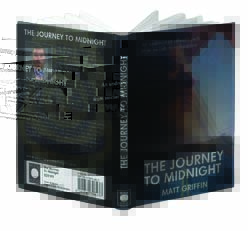 Matthew’s book The Journey to Midnight: An undercover officer’s path from suicide to redemption is available at Amazon and fine bookstores everywhere.