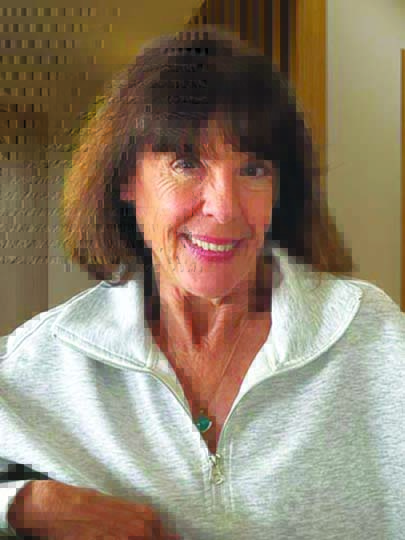


 Amanda and Booky Friend ( submitted photo)
Connecting through Storytelling
By Amanda Johnson
The Story Oracle | Co-founder and CEO Saved By Story Publishing
Thank you…” I looked into eyes wet with gratitude. “…for bringing her back to us.”
“What do you mean?” I wondered.
“She’s an amazing woman who shows up for everyone, but there was a part of her that wasn’t showing up anymore… since the accident.” The beloved daughter-in-law I’d heard so much about caught a runaway tear. “But it’s back. Thank you.”
“All I did was create the space for her to do the work, and it was such a privilege.”
Rarely do I get to interact with clients’ loved ones, but this is the sentiment shared by the handful who’ve connected with me.
I was at her first pre-launch gathering. The tear-stained (hers and mine) manuscript had been moved to production, and it was time for her to re-engage the heroes from the story—to thank them, to announce she had finished writing, and to ask for support in getting the book into the right hands.
Watching her delight the room, I was transported back to our first conversation over Zoom and her first retreat.
The Beginning
“I think you might have to cry… a lot…” I stared into the eyes of the woman whose writings of her journey of stunning faith, advocacy, and miracles had failed to move me. (Yes, you read that right. Something was missing.) “To connect with that one sitting in the ICU wondering if their loved one will live, you’ll have to reconnect with your mother’s heart too, which I imagine is full of tremendous emotion…”
Determined to keep her promise—to share the miraculous journey if He chose to make it so—she signed the contract and sped through the pre-work before the fast-approaching retreat.
For the first three days, she showed up as the dynamic force of Good that she is—full presence to people and the process, wild honesty, and transporter of nature’s glory (in the form of heart-shaped rocks and golden leaves) from early morning walks into the cocoon I had created for a dozen authors.
The fourth day, she struggled to construct the timeline as we organized her stories, confirming my intuition that emotional residue of the tragedy lay between her and a manuscript that felt true and good.
Then it was time to write.
I was coaching another author when I heard the blood-curdling sound and hurried toward it.
Laptop open on the bed in front of her, she wailed. I placed my arm around her shoulder until she was empty for the day.
That was the first of many days of emptying… I mean, writing through the true emotions of a mother who wondered and wandered through days, months, and years of acute crisis, grueling rehabilitation, and miraculous reclamation.
The Disconnection Epidemic
“And I couldn’t have done it without Amanda and her cocoon…” Her voice brought me back to the room full of heroes and their now more-whole-yet-lighter leader.
I regularly think about her daughter-in-law’s words: “She’s an amazing woman who shows up for all of us, but there was a part of her that wasn’t showing up anymore… since…”
How many of us have a loved one who would say the same thing about us?
We’re showing up, we’re loving on the people around us, and we’re even wowing folks with our superpowers; and yet there’s a part (at least one) that’s just not showing up anymore. If you’re nodding, you’re not alone.
Research identifies disconnection as a public health epidemic in the United States, strongly linked to depression and addiction. What’s causing this? Well, I suppose it depends on who you ask.
There’s data to suggest that social media is distorting our relational and physiological realities, confusing fast communication and hyperconnectivity with intimacy, while its algorithms increase self-consciousness and social division. Those more religious-minded point to the erosion of principles and rituals that bound communities, families, and partners together. I’ve heard holistic health practitioners say it’s partly the result of microbiome and neurotransmitter imbalances due to high consumption of processed foods, compromised water supplies, and even vaccinations.
Me? Well, I’m always of the opinion that it’s never just one factor; but I’m going to leave the sociocultural, spiritual, and physical causes to be debated and (hopefully) addressed by the experts in those domains while I focus on the part of the solution I’m here to share: Story.
“Research identifies disconnection as a public health epidemic in the United States, strongly linked to depression and addiction. What’s causing this? Well, I suppose it depends on who you ask.”
What if Story is an Answer?
After twenty-plus years of mindfully engaging, writing, and facilitating storytelling in community, I can confidently proclaim that Story wields salvific power for those disconnected from self and others.
Salvation? Really, Amanda? Isn’t that a bit much? Can speaking and writing our stories protect us from harm, risk, loss, or destruction… even redeem us?
Ask the hospice nurse whose family members recognized that a part of her came back as a direct result of her writing a truer story that included her mother’s heart. Perhaps the wildly successful entrepreneur who experienced an unexpected healing with her father while writing a memoir about overcoming beliefs he’d instilled. Perchance the social worker who made preparing for a custody evaluation more exciting by writing a fictional choose-your-adventure book, not knowing that by the end of the manuscript, she would realize she had written her own story and courageously choose to walk away from her marriage, start a new chapter of life, and maybe more importantly… end an insidious generational narrative for her children.
Maybe even the clinical therapist who wiped her forehead and held her stomach while she wrote the most pivotal scene in her novel and, two weeks later, realized that her character wasn’t the only one processing a family secret that had wreaked havoc on the mental health of the family system.
Decades of research show that writing and sharing personal stories engage mirror neurons and trigger cascades of neurotransmitters, such as dopamine, oxytocin, and serotonin, fostering empathy, intimacy, motivation, learning, and collaboration. Expressive writing, in particular, can help uncover and process suppressed emotions and memories, often hidden during moments of self-protection. Studies also demonstrate that engaging with others’ stories enhances emotional awareness, labeling, and processing.
So, why don’t we just share our stories?
The Most Common “Buts”
Maybe it’s because we’re so busy and can’t imagine taking the time to slow down and… wait… feel all of that again? Yuck! And no one has the desire, time, or capacity to listen to a story like ours, right? Might it be because we regret the roles we’ve played and wonder if the damage can be repaired? Perhaps we don’t want to stress someone with our story, or we are tired of people minimizing or gaslighting our facts and feelings? Maybe we’ve been isolating so long, we don’t know where we would start or whether anyone would remember the sound of our voice?
All of those reasons are valid and can also be overcome by someone determined to reconnect with their true self and others.
How?
Create Safety for Storytelling
Find a safe place with at least one human who has some capacity—time, intention, presence, empathy, etc. A personal therapist or therapy group revolving around a particular trauma or tragedy that became your “since…” (i.e. grief, divorce, betrayal trauma, etc.). Maybe a recovery group if your life has been impacted by addiction. Or if you’re a helping professional or leader who wants to write and publish to save others with your story, look for a therapeutic writing community like the one we’ve cultivated at Saved By Story.
Carl Jung said it best, “We don’t get wounded alone, and we don’t heal alone.” What he didn’t say there, but I know for certain, is the way we do that most effectively—writing and sharing our stories.
About the Author
Amanda Johnson alchemizes twenty-five years of transformative experiences through story literacy, writing, and narrative medicine to fulfill her mission: to equip individuals to use humanity’s most innate tools to transmute the pain of their backstory into a more magically-ever-after for themselves, their loved ones, and those they serve.
Known today as The Story Oracle, Amanda partners with organizations and individual helping professionals, creatives, coaches, CEOs, educators, and parents who want to learn how to use Story, Writing, and Community to open portals of (re)connection and belonging, (re)build resilience and trust, and (re)claim and leverage latent superpowers in themselves and their families, workplaces, and communities. With her partners at Saved By Story, she midwifes paradigm-changing brands, content, and more whole thought leaders and storytellers into the world.
Learn more by visiting https://the-story-oracle.com/