


We live in a trauma-saturated world. Just turn on the evening news and you’ll see violence, disaster, and suffering. It’s overwhelming. For some, like during the Vietnam War era—or even now—simply watching the news can be traumatic. Trauma isn’t just something that happens on battlefields or in hospital emergency rooms. It’s in our homes, our workplaces, and our everyday lives.
What’s still sometimes misunderstood, is how trauma affects the body—and how healing must involve the body as well as the mind. While Western culture has often focused on trauma through a psychological lens, there’s a growing understanding that unresolved trauma lives in the nervous system. And for healing to occur, the body must be part of the conversation.
Let’s take a simple example from nature
On a morning walk through the Arizona desert, it’s common to spot a jackrabbit darting away from danger—whether it’s a barking dog or a nearby coyote. When the rabbit finds safety, it freezes, motionless. It waits. And then, something fascinating happens: it trembles. Its body shakes out the tension, its ears flick, and then it hops off as though nothing happened. The rabbit completes the stress cycle. The danger has come and gone, and the energy it generated has discharged. Humans, however, don’t typically do this.
Although we share the same ancient biological wiring—the autonomic nervous system and vagus nerve responses of fight, flight, or freeze—we don’t usually complete the cycle. We may freeze in the face of trauma, but we rarely shake, move, or release the energy. Instead, we override our body’s instincts with our rational mind.
This disconnect may have started with the influential philosopher René Descartes, who famously declared, “I think, therefore I am.” That statement ushered in centuries of emphasis on thought over feeling—mind over body. In many ways, modern culture still lives in that duality.
Unlike animals, who instinctively discharge stress and move on, humans tend to store it. We talk about the trauma. We think about it. We go over it again and again. But the body, still holding the original activation, is left out of the healing process. And in many cases, the trauma worsens—not because of what happened, but because the body was never allowed to complete its natural resolution.
This article invites you to consider that trauma dysregulation is not just a psychological or emotional experience—it’s a physiological one. Chronic trauma often arises because the energy that was activated never came down. It was never released. It stayed trapped in the body, creating patterns of hypervigilance, shutdown, anxiety, and emotional pain.
As trauma researcher and somatic pioneer Dr. Peter Levine explains in his book Waking the Tiger:
“In humans, trauma occurs as a result of an initiation of a physiological cycle that is not allowed to finish.” (p. 155)
In other words, trauma isn’t always about the event itself—it’s about what didn’t happen afterward.
Across the world, many cultures have embodied ways of releasing trauma—through movement, ritual, breath, sound, or spiritual practices. In Western societies, we’ve largely lost these traditions. But they’re making a comeback. More therapists, coaches, and healers are recognizing the importance of somatic (body-based) approaches to trauma healing. The vagus nerve, in particular, has become a focal point of research and intervention because of its key role in regulating our body’s stress response.
This growing awareness is powerful. We’re beginning to understand that what goes up—the surge of adrenaline, the freeze of fear, the tension of survival—must also come down. If we allow the body to complete its natural arc, we give ourselves a chance to heal.
You don’t have to live trapped in a cycle of re-experiencing or emotional overwhelm. Healing is possible—not just by talking, but by tuning in. Your body holds the key.
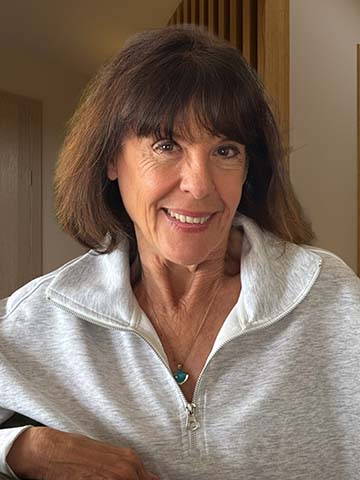
Sharon Youngblood is a Trauma Informed Coach and Somatic Practitioner. Her practice is focused on teenagers, young adults, adults, seniors, and LBGTQ persons to reduce and resolve anxiety, life chaos and trauma. Reach Sharon at mailto:sharonyoungblood7@gmail.comor 520-331-1483.